带浮点运算功能的指针式仪表计算器
文章背景与核心概要
本项目展示了一款名为“Calcumator 2000”的定制机电计算器,它巧妙地将复古工业美学与现代嵌入式编程相结合。该设备摒弃了传统的数字显示屏,转而使用模拟电压表作为显示输出,并配以CNC加工的枫木外壳和高品质NKK触觉开关。
在技术实现上,该计算器基于AVR128DA28微控制器,通过脉冲宽度调制(PWM)驱动多个模拟仪表。为了克服浮点运算的精度问题,作者采用了定点算术逻辑,并设计了专门的指示灯来处理负数和溢出状态。这不仅是一次对早期计算设备显示技术的致敬,也是对嵌入式系统UI设计与硬件交互的一次深度探索。
简介与灵感
不同寻常的时钟是电子DIY项目中常见的创意,但如何让它们看起来美观大方始终是一个真正的挑战。除了计时设备,人们对计算器的历史也怀有浓厚的兴趣。早期的计算设备由于缺乏合适的显示技术,往往落后于通用计算,只能依赖纸带、阴极射线管或白炽灯面板(例如1957年的卡西欧14-A)。
Unusual clocks are a common idea for electronics DIY projects, but making them look presentable is always the real challenge. Beyond timekeeping, there is a deep fascination with the history of calculators. Early calculating devices often lagged behind general-purpose computing due to a lack of suitable display technology, relying instead on ticker tape, cathode ray tubes, or incandescent lightbulb panels (such as the 1957 Casio 14-A).
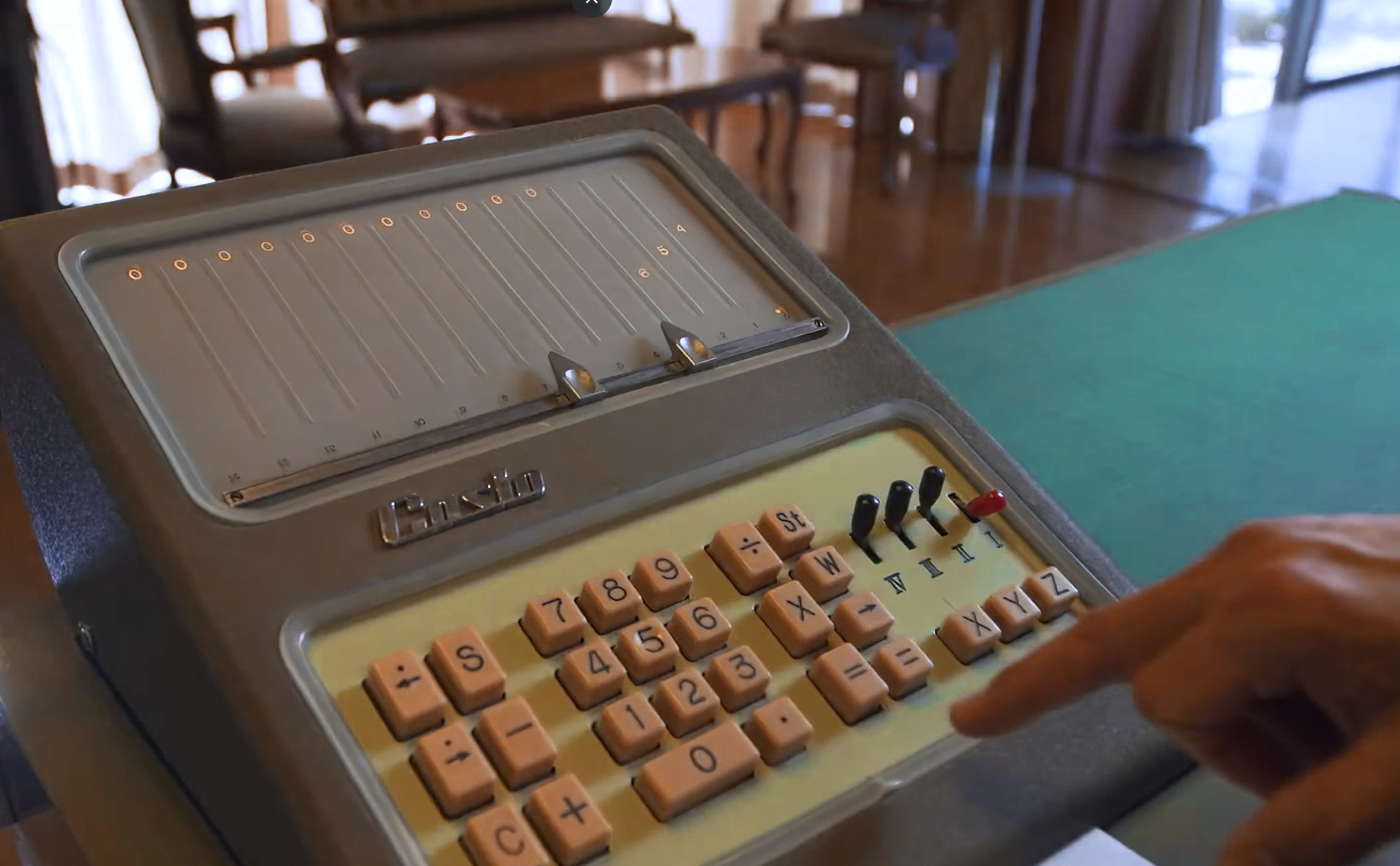
令人惊讶的是,很少有计算器使用机电面板仪表作为显示器。为了填补这一空白,作者设计了一款独特的仪表式计算器。
Surprisingly, very few calculators utilized electromechanical panel meters as displays. To address this gap, a unique meter-based calculator was designed.
制作显示面板
制作过程始于一张3毫米厚的亚克力板,背面喷涂蓝色油漆:
The build began with a 3 mm sheet of acrylic, spray-painted blue on the back side:

使用CNC铣床,有选择地去除了油漆并切割出开口,以创建精确的框架:
Using a CNC mill, the paint was selectively removed and openings were cut to create precise framing:
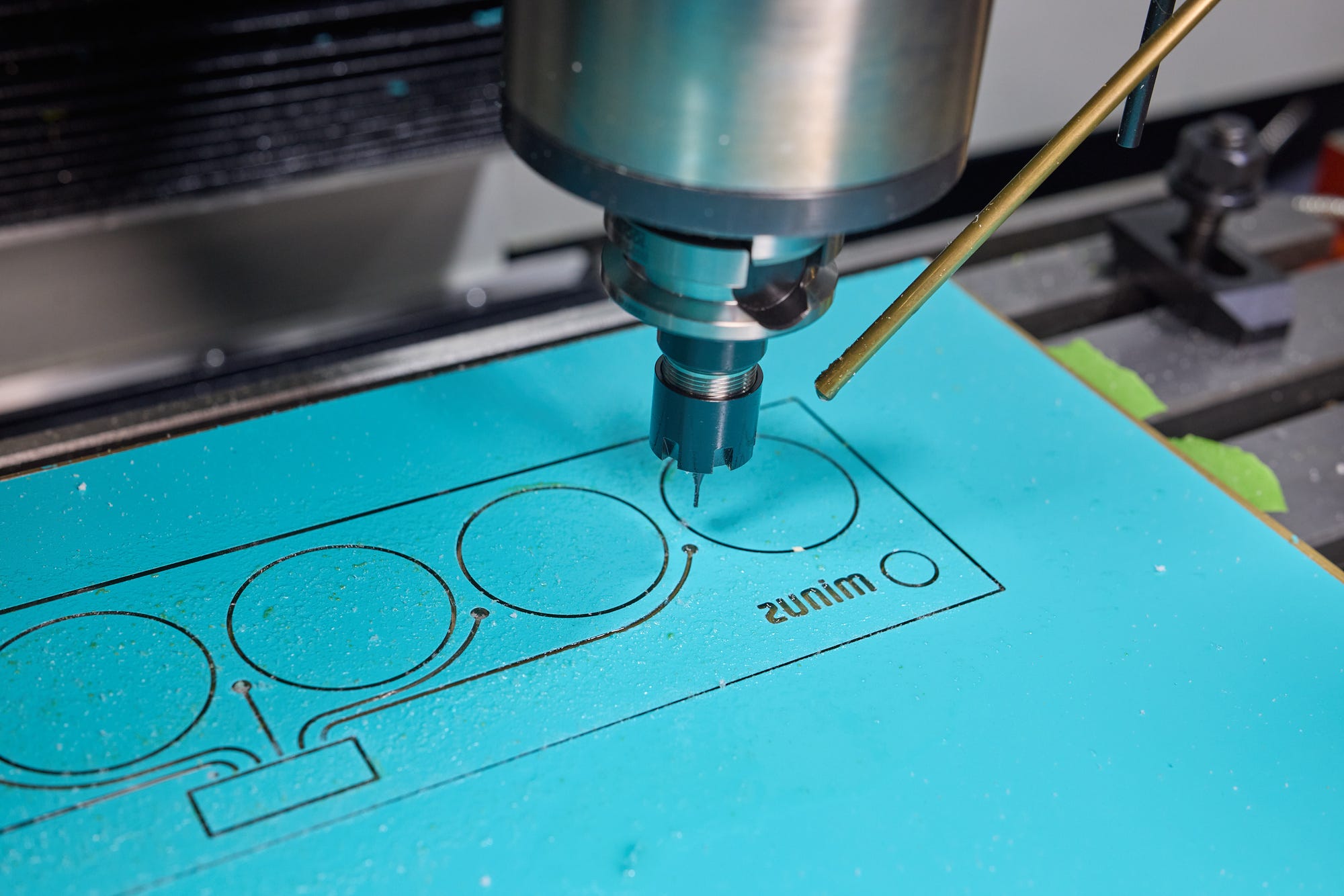
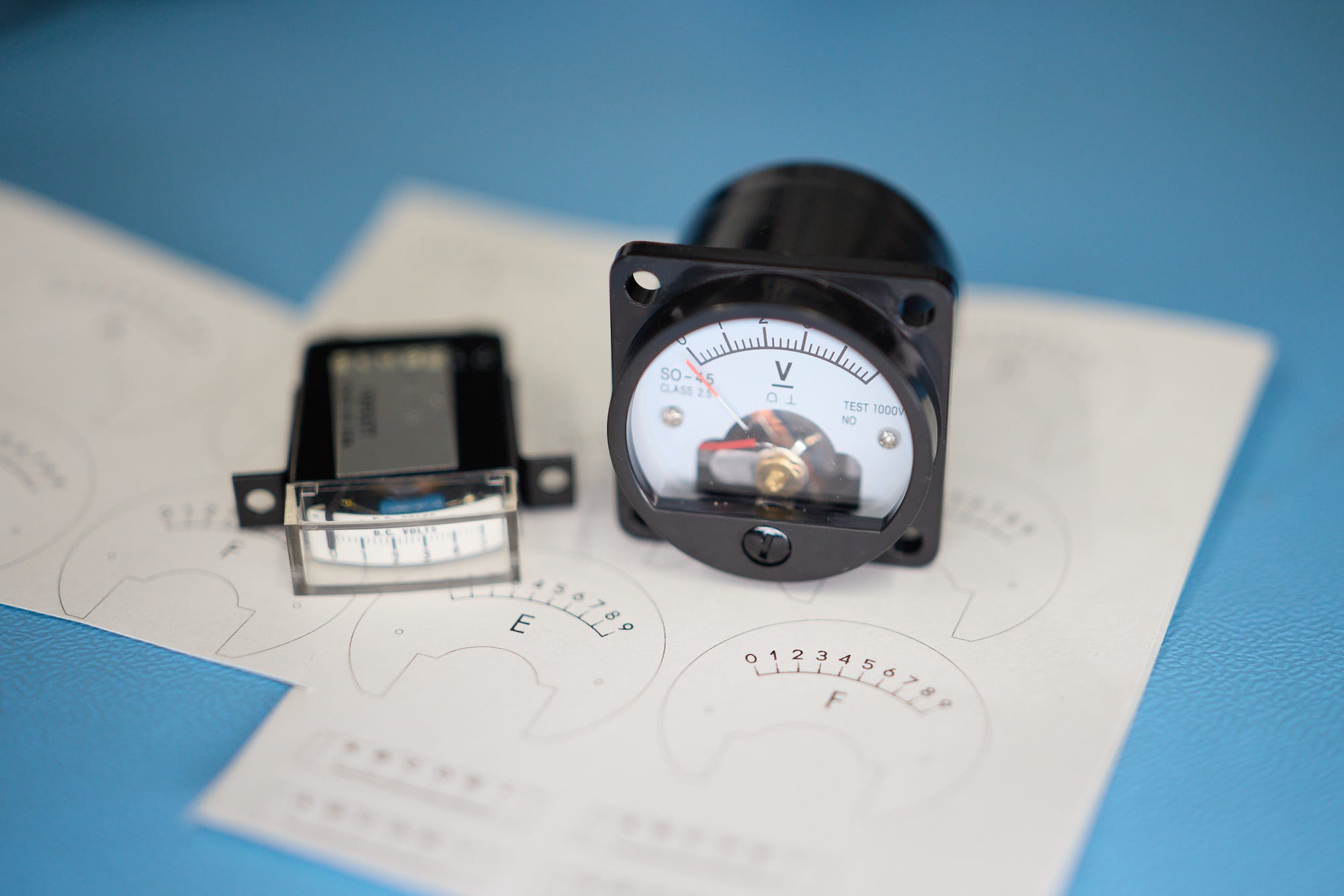
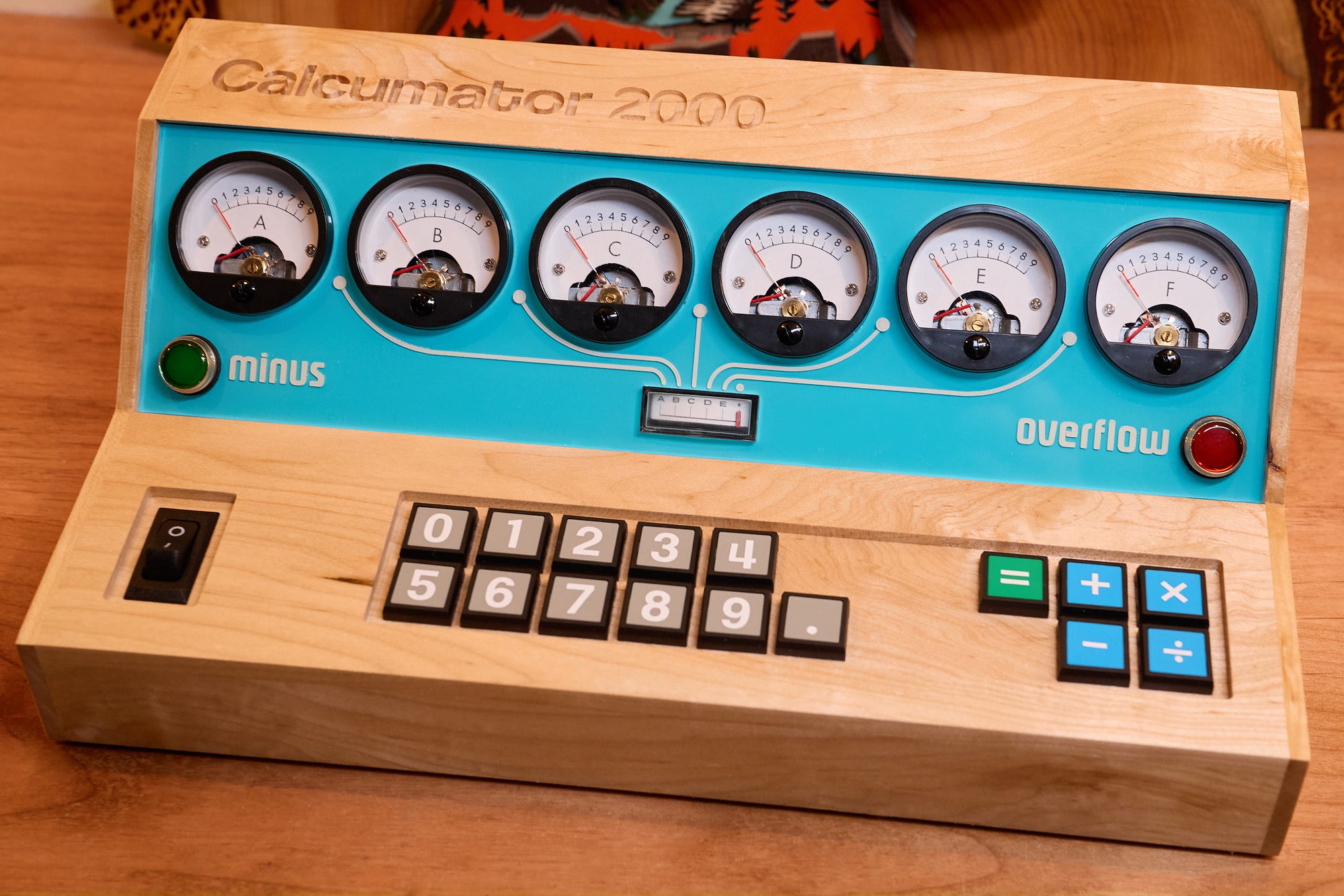
字母区域再次上漆,以增加对比度和立体感。显示屏本身由六个来自亚马逊的通用“SO-45”面板电压表组成,并配有一个从eBay采购的复古边缘式电压表,用于处理浮点值。每个仪表都有一个打印在不干胶纸上的定制表盘(模板文件可在此处获取):
The lettered areas were painted again for contrast and a three-dimensional appearance. The display itself comprises six generic "SO-45" panel voltmeters from Amazon, paired with a vintage edgewise voltmeter sourced from eBay to handle floating-point values. Each meter features a custom face printed on adhesive paper (template file available here):
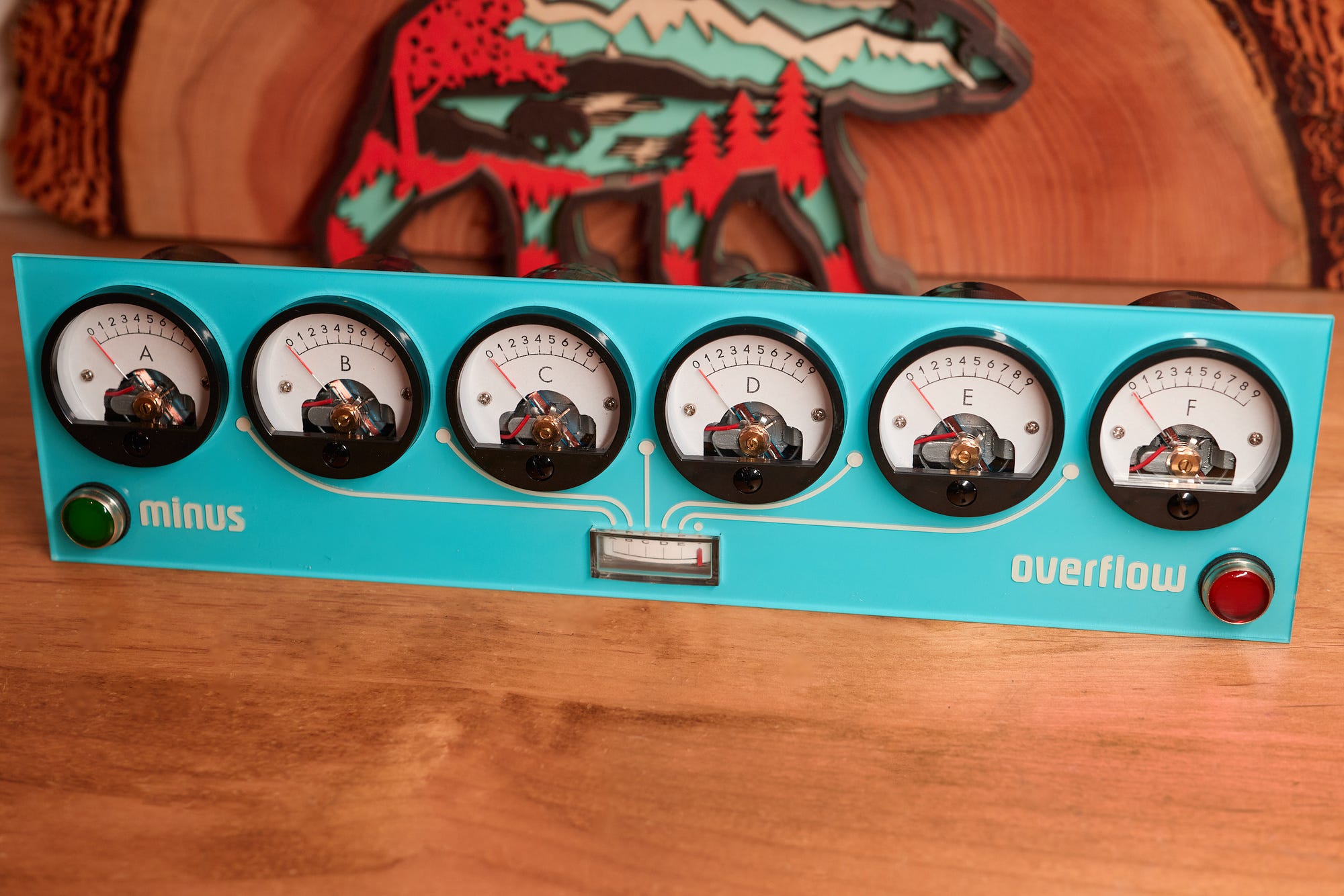
完成后的面板还集成了两个Dialight 656系列面板指示灯(产品目录页),用于指示负数结果和系统溢出:
The completed panel also integrates two Dialight 656 series panel indicators (catalog page) to signal negative results and system overflows:
设计与构建外壳
由于显示面板非常大,因此采用了非标准的键盘布局:左侧两行排列着十个数字键和一个小数点键,右侧则是一组五个操作键。
Because the display panel is quite massive, a non-standard keyboard layout was implemented: ten digits and a decimal point arranged in two rows on the left, alongside a cluster of five operator keys on the right.
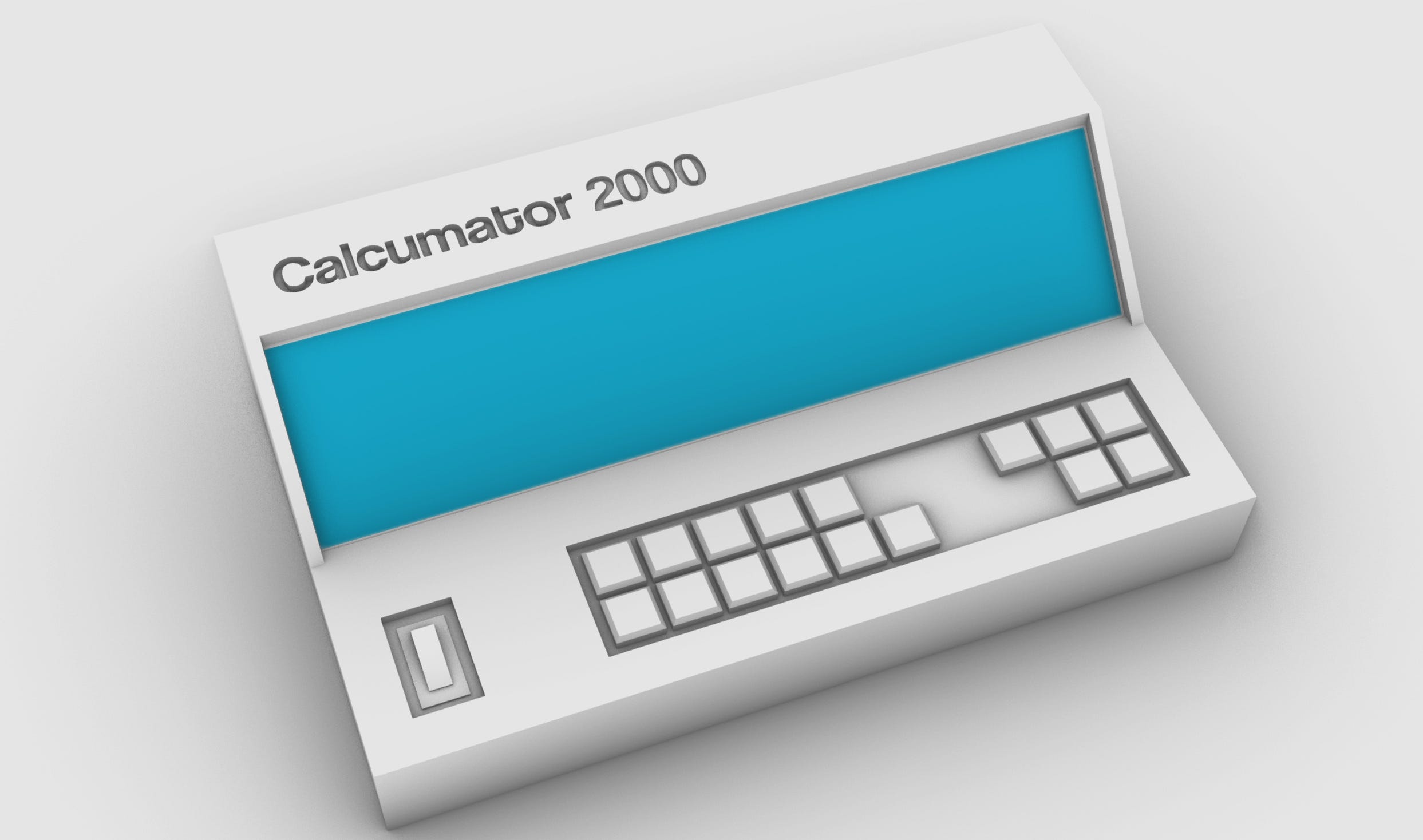
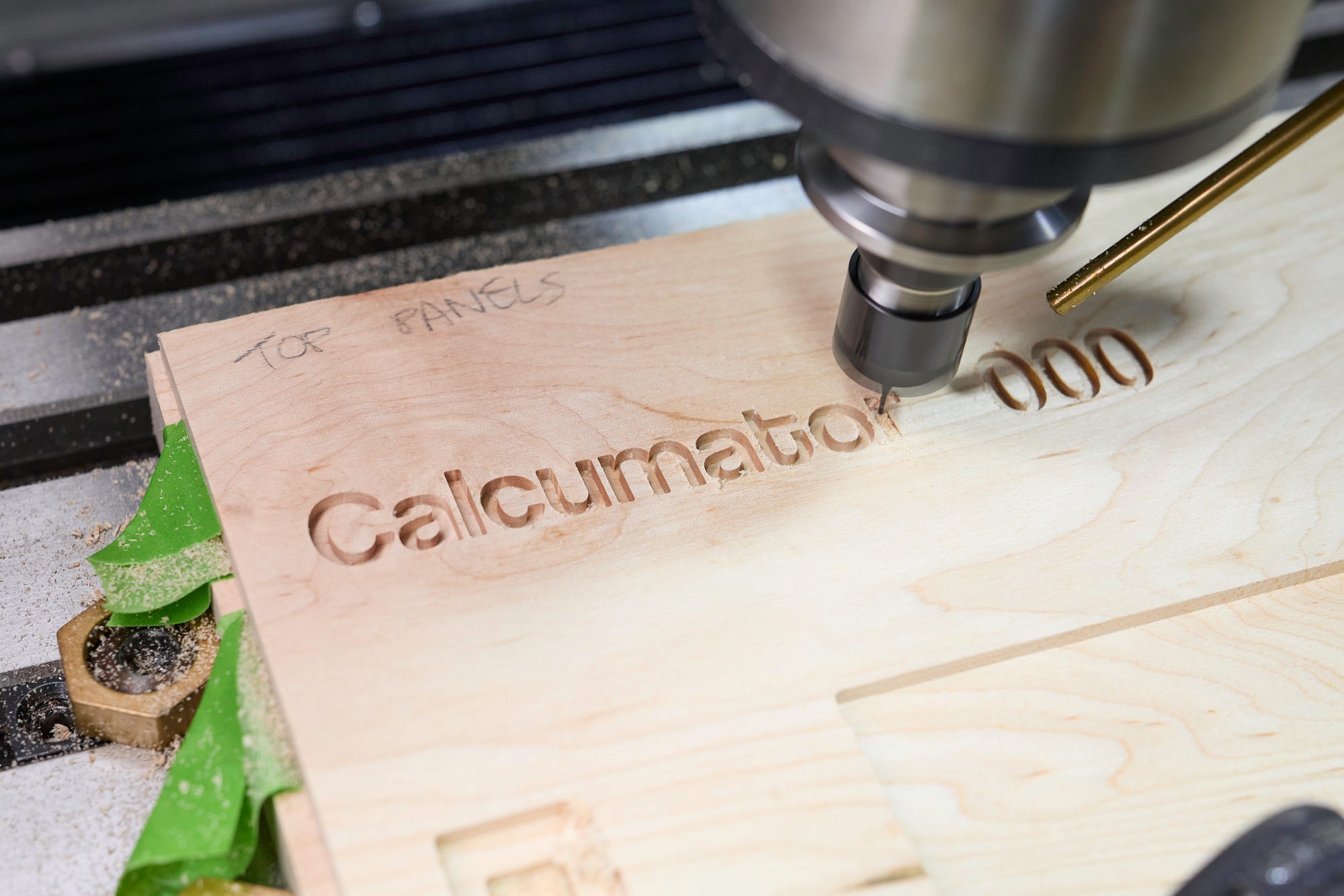
外壳由车间里重新切割的薄枫木板制成,排版和凹陷的按键矩阵均由CNC路由器加工而成:
The enclosure was constructed from thin maple lumber stock resawn in the workshop, with typography and the recessed key matrix machined on the CNC router:
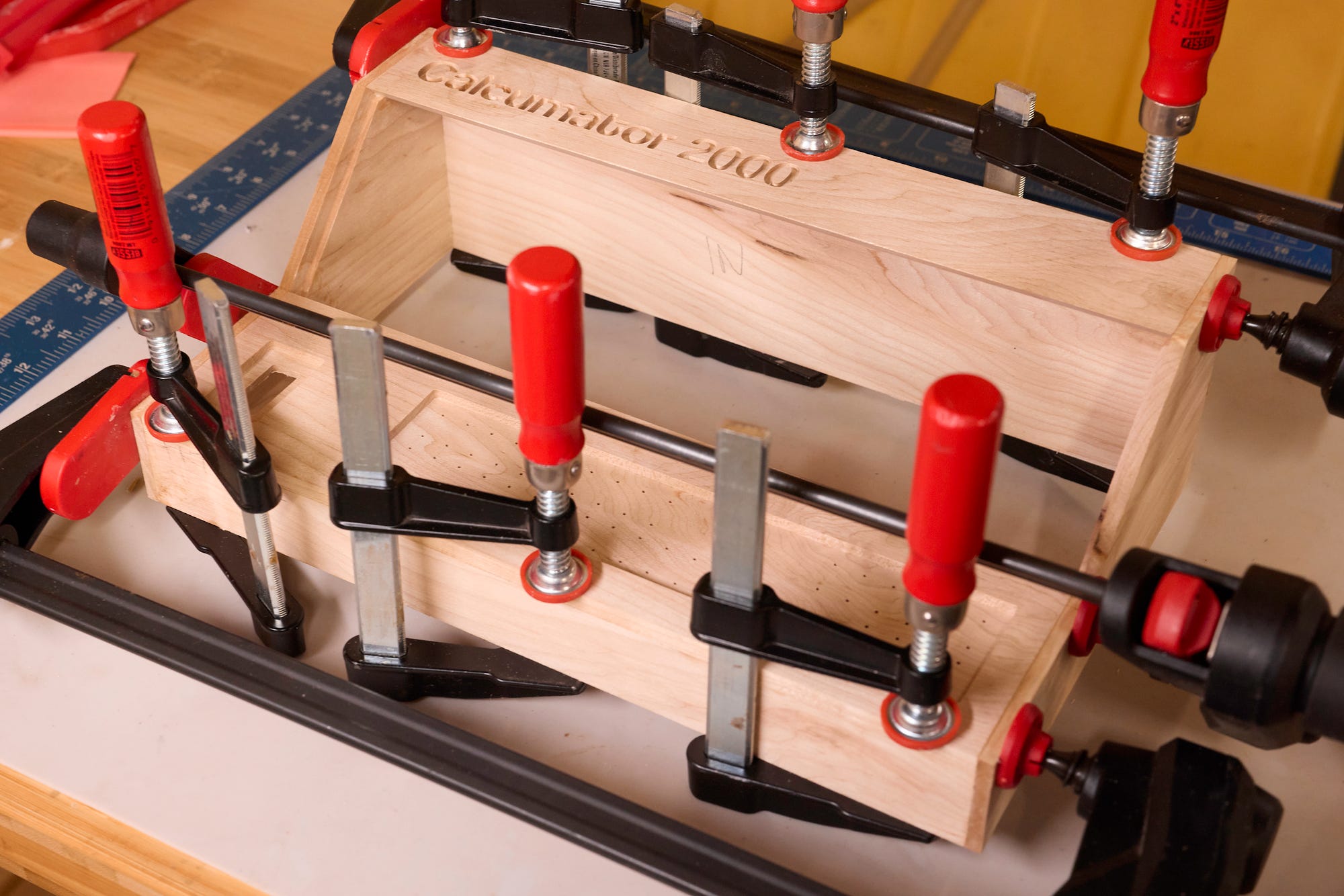
粘合过程中使用了大量的夹具以确保紧密贴合:
The glue-up utilized plenty of clamps to ensure a secure fit:
键盘依赖于16个优质的18×18毫米NKK JF系列触觉开关(产品目录),并配有定制的乙烯基按键贴纸。
The keypad relies on sixteen premium 18×18 mm NKK JF series tactile switches (catalog) paired with custom vinyl key decals.
电子与软件架构
计算器的大脑由一个8位AVR128DA28 MCU组成,直接由5V电源适配器供电。
* 显示控制: 使用跨越七条数字线(PD0-PD6)的脉冲宽度调制(PWM)来驱动仪表。
* 键盘扫描: 实现了一个4×4的感应驱动网格(PA0-PA3 / PA4-PA7)。
* 指示灯: 使用两条控制线(PC0,PC1)来控制状态灯。
为了避免标准浮点类型固有的精度问题,作者实现了定点(6+5位)算术运算。完整的带注释源代码可供下载。
The brains of the calculator consist of an 8-bit AVR128DA28 MCU, powered directly by a 5V wall wart. * Display Control: Uses pulse-width modulation across seven digital lines (
PD0-PD6) to drive the meters. * Keypad Scanning: Implements a 4×4 sense-drive grid (PA0-PA3/PA4-PA7). * Indicators: Uses two control lines (PC0,PC1) for status lamps.To avoid precision issues inherent to standard floating-point types, fixed-point (6+5 digit) arithmetic was implemented. The fully commented source code is available for download.
用户界面的怪癖
正如之前关于计算器UI设计的文章所探讨的那样,在没有专用清除(C)按钮的情况下处理输入需要创造性的逻辑:
* 连续按两次 +、× 或 ÷ 可以触发重复操作。
* - 键兼作改变符号的前缀(除非在按下等号键后立即按下)。
* 按两次 = 键作为清除计算器状态的指令。
As explored in previous writings on calculator UI design, handling inputs without a dedicated clear (
C) button required creative logic: * Repeated operations can be triggered by pressing+,×, or÷twice. * The-key doubles as a prefix for changing signs (unless pressed immediately after the equals key). * Pressing=twice acts as an instruction to clear the calculator state.
演示视频
以下视频演示了该计算器处理分数、负值和系统错误条件的过程:
The following video demonstrates the calculator processing fractions, negative values, and system error conditions:
关于作者
如果您喜欢这篇文章,请查看《电路的秘密生活》(The Secret Life of Circuits)——这是一本图文并茂、通俗易懂的电子学入门书,内容涵盖从导电物理到嵌入式系统,包含超过420页的原创内容,且完全没有使用AI。
If you liked this article, check out The Secret Life of Circuits—a richly illustrated, lucid introduction to electronics ranging from conduction physics to embedded systems, featuring over 420 pages of original content and zero AI.
我撰写关于电子学、数学基础、技术史以及其他极客兴趣的内容。立即订阅。
I write about electronics, the foundations of mathematics, the history of technology, and other geek interests. Subscribe now.