理解负电阻
文章背景与核心概要
本文探讨了模拟电子学中一个反直觉的概念——“负电阻”。传统的电阻遵循欧姆定律(\(I = V/R\)),而负电阻则描述了电流与电压关系违背传统预期的电路。文章区分了“真正的”负电阻(这需要外部电源才能运作)以及“负微分电阻”(这是一种电路的 \(V-I\) 曲线呈现向下斜率或“折返”的现象,常见于结型场效应管(JFET)或晶体管等专用组件中)。
通过本文,读者可以深入了解负电阻的物理本质、如何利用运放构建真正的负电阻转换器,以及负微分电阻(如厄米特/Lambda二极管和水平回跳现象)在实际电路中的表现与应用。
Defining Resistance
电阻(\(R\))是对稳定电流流动的阻碍。在纯电阻组件中,电压(\(V\))与电流(\(I\))之间的关系是线性的,由 \(I = V/R\) 定义。
Defining Resistance
Resistance (\(R\)) is the opposition to the flow of steady current. In a purely resistive component, the relationship between voltage (\(V\)) and current (\(I\)) is linear, defined by \(I = V/R\).
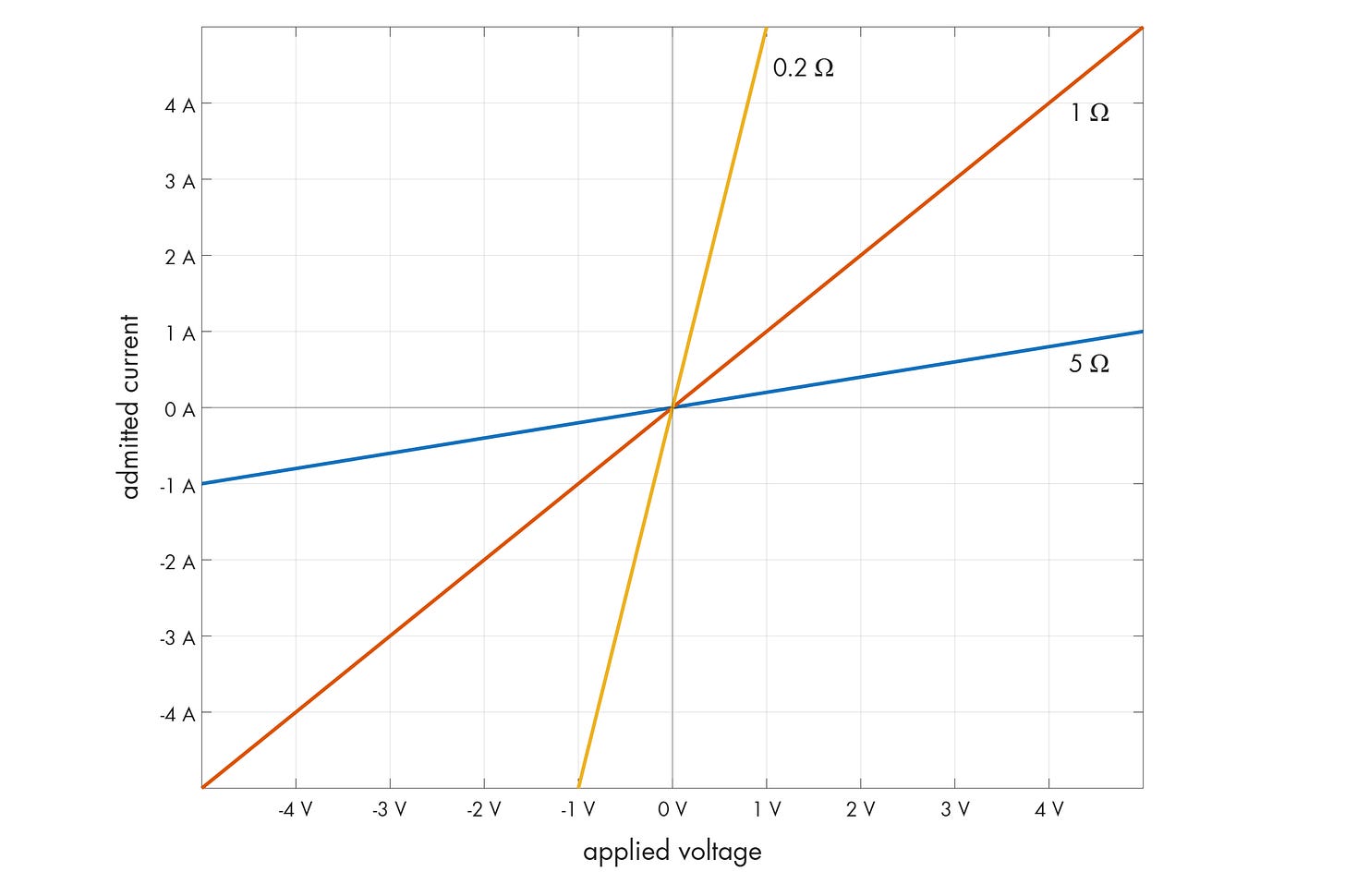
对于二极管等非线性组件,我们使用微分电阻,它用于模拟在特定偏置点附近对小信号偏差(\(\Delta v / \Delta i\))的响应,而不是组件的体电阻。
For non-linear components like diodes, we use differential resistance, which models the response to small signal deviations (\(\Delta v / \Delta i\)) around a specific bias point rather than the bulk resistance of the component.
True Negative Resistance
理论上,“负阻器件”(具有 \(R < 0\) 的组件)会产生与所加电压方向相反的电流。然而,由于功率耗散定义为 \(P = V^2 / R\),负电阻意味着该组件正在产生能量。
True Negative Resistance
A "negistor" (a component with \(R < 0\)) would theoretically produce current in the opposite direction of the applied voltage. However, because power dissipation is defined as \(P = V^2 / R\), a negative resistance would imply the component is generating energy.
真正的负电阻只能通过使用有源电路(例如运算放大器配置)将能量反馈回信号源来达到。
True negative resistance can only be achieved by using an active circuit (such as an op-amp configuration) to feed energy back into the signal source.
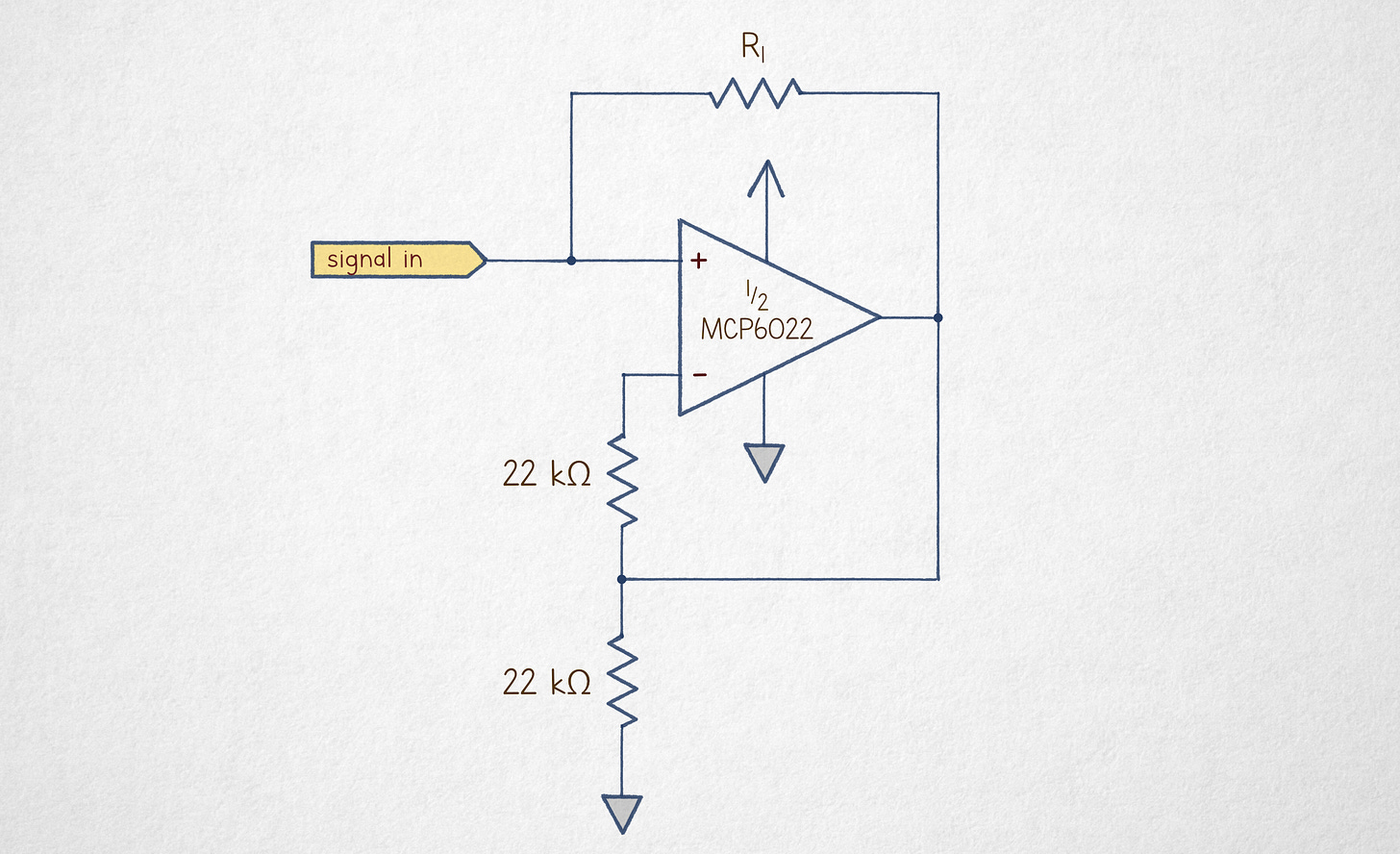
通过使用具有特定增益的运算放大器,我们可以创建一个在信号源和地之间充当负电阻的电路。
By using an op-amp with a specific gain, we can create a circuit that acts as a negative resistor between the signal source and ground.
Negative Differential Resistance (NDR)
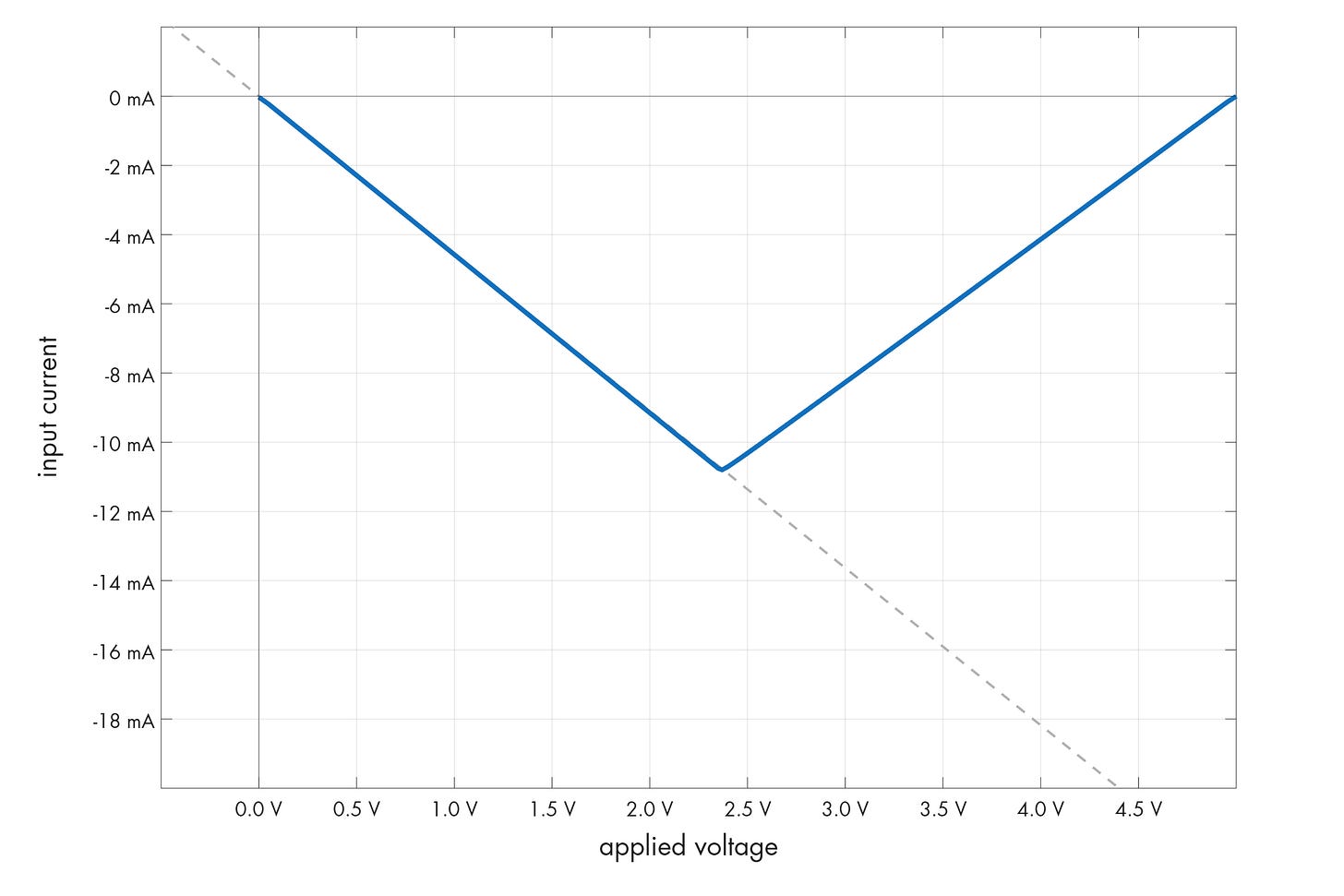
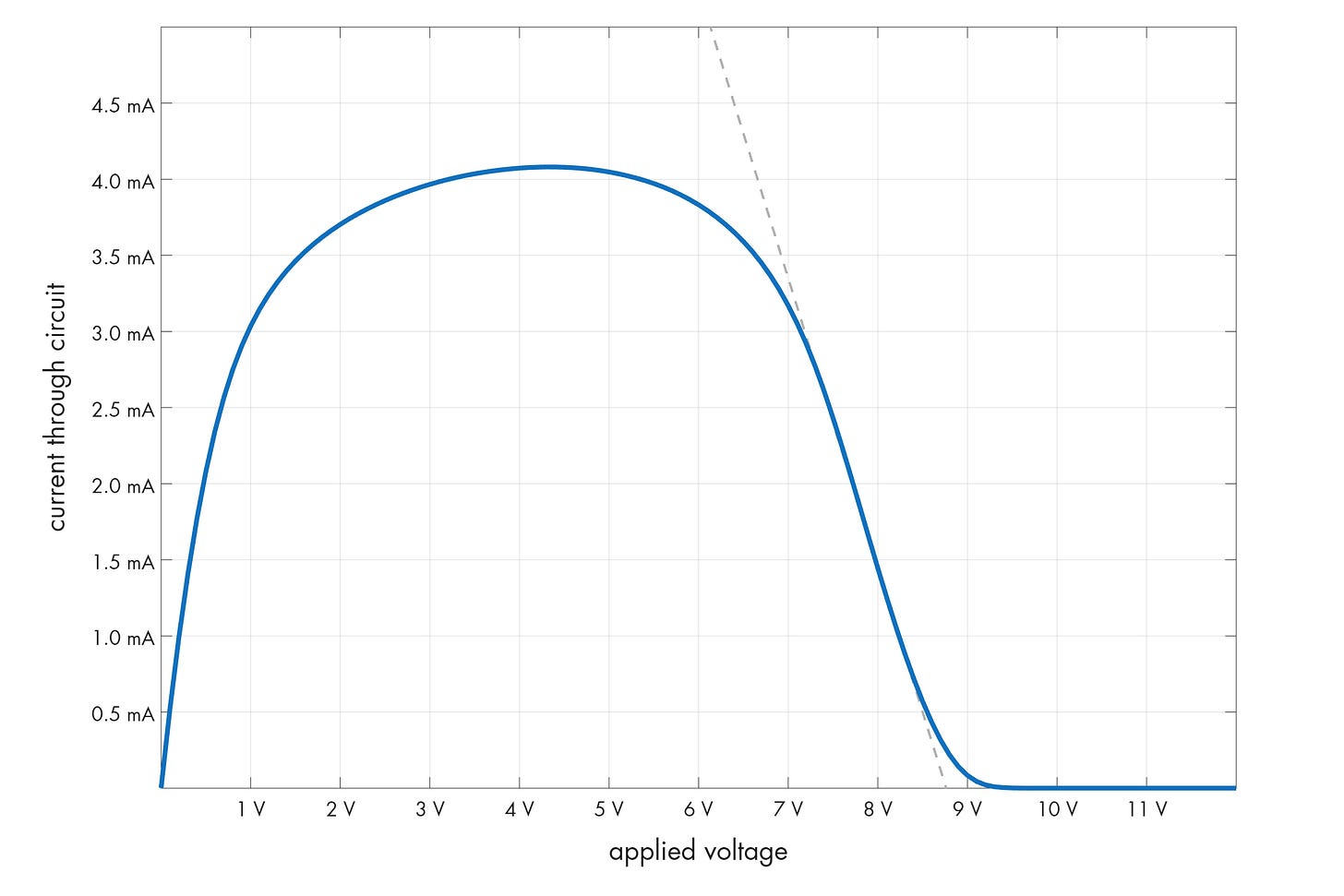
“负电阻”的大多数实际应用都是指负微分电阻(NDR)。当 \(V-I\) 曲线具有负斜率区段时,就会出现这种情况,这意味着在特定范围内,电压的增加会导致电流的减少。
Negative Differential Resistance (NDR)
Most practical applications of "negative resistance" refer to Negative Differential Resistance (NDR). This occurs when a \(V-I\) curve has a section with a negative slope, meaning that within a specific range, an increase in voltage leads to a decrease in current.
The Lambda Diode
NDR 的一个经典例子是“Lambda 二极管”,这是一种由两个互补型 JFET 构成的电路。
The Lambda Diode
A classic example of NDR is the "lambda diode," a circuit constructed from two complementary JFETs.
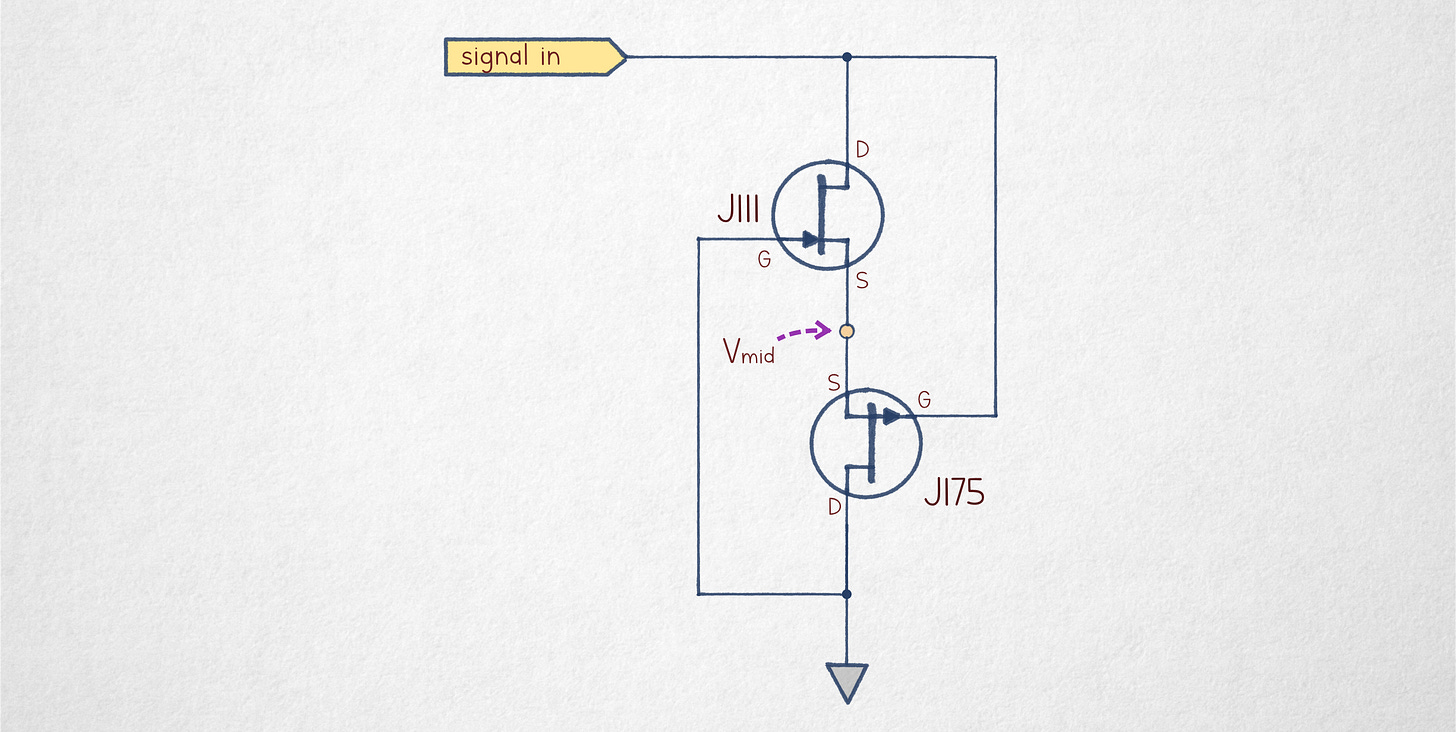
在这种配置下,晶体管的偏置使得它们在输入电压增加时开始截止,从而导致电流急剧下降。
In this configuration, the transistors are biased such that they begin to cut off as the input voltage increases, resulting in a sharp decrease in current.
Horizontal Snapback
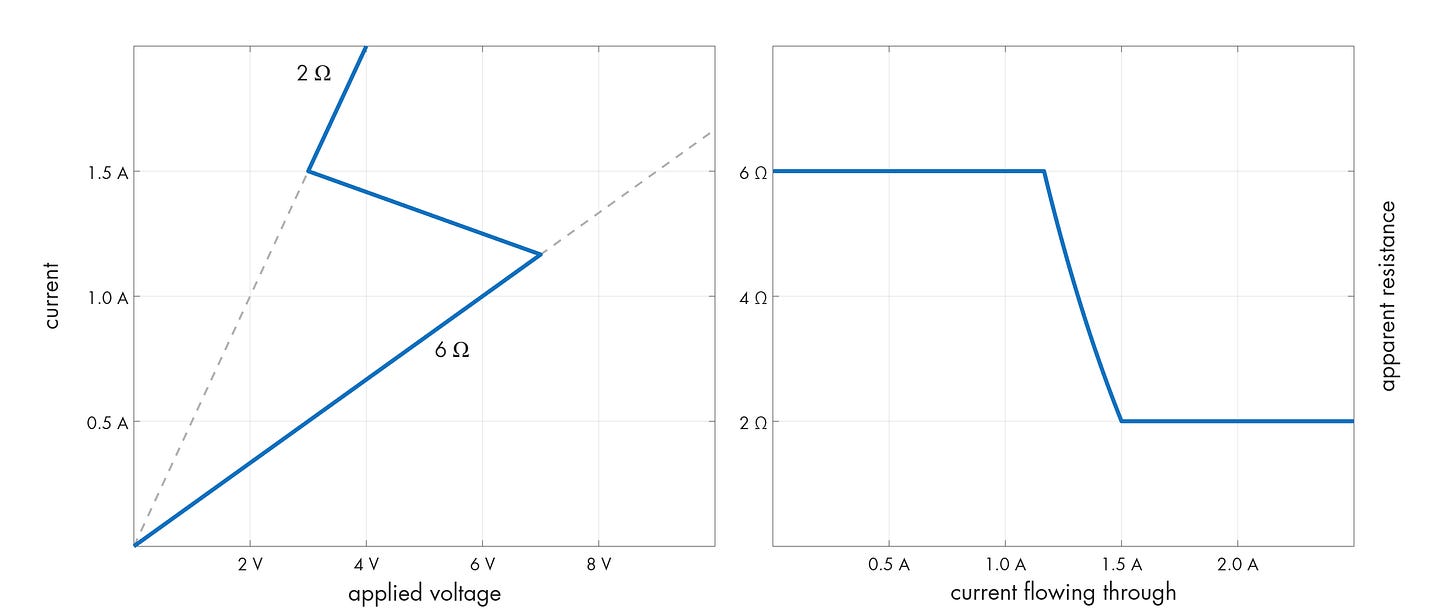
NDR 的另一种形式是“回跳(Snapback)”,一旦跨越特定的阈值,电路就会在更低的电压下维持更高的电流。这种行为常见于双极型晶体管,它不同于垂直折返式 NDR,因为它允许多个电流水平存在于单个电压点。
Horizontal Snapback
Another form of NDR is "snapback," where a circuit sustains higher currents at lower voltages once a specific threshold is crossed. This behavior is often observed in bipolar transistors and is distinct from the vertical-kink NDR, as it allows multiple current levels to exist at a single voltage point.