陷入疯狂的递归:当AI不断吞噬自己的输出
文章背景与核心概要
本文探讨了生成式AI中递归生成的混沌效应——即模型不断以自身的输出作为输入进行迭代。虽然图像和视频模型在经历数次递归后会迅速陷入超现实的恐怖谷与视觉崩溃,但文本模型的表现则呈现出不同的演变规律。
作者通过一项实验,让Gemini反复“大胆重写”雷蒙德·钱德勒(Raymond Chandler)的经典小说片段。结果显示,随着迭代次数的增加,文本逐渐偏离原意,演变成越来越光怪陆离、充满戏剧性和暴力色彩的隐喻,直到经过数十轮迭代后才最终趋于稳定。这篇文章以幽默而深刻的视角,剖析了人工智能在闭环反馈下的行为特性。
Recursion into Madness
陷入疯狂的递归
Summary
摘要
The author explores the chaotic effects of recursive AI generation—where models endlessly feed on their own output. While image and video models quickly spiral into surreal horror, text models handle closed-loop rewrites differently. Through an experiment of repeatedly asking Gemini to "boldly rewrite" a classic Raymond Chandler passage, the text gradually devolves into increasingly bizarre, dramatic, and violent metaphors before finally stabilizing after dozens of iterations.
作者探讨了AI递归生成的混沌效应——模型无休止地吞噬自身的输出。图像和视频模型会迅速陷入超现实的恐怖深渊,而文本模型处理闭环重写的方式则有所不同。通过一项实验,作者反复要求Gemini“大胆重写”雷蒙德·钱德勒的经典片段,文本逐渐退化为越来越怪异、戏剧化和充满暴力的隐喻,直到经过数十轮迭代后才最终稳定下来。
Perspectives on Generative AI
关于生成式AI的观点
I don’t write about generative AI much. Everyone else does; not much of consequence ever gets said. I think the technology is great where it helps us automate mundane tasks, cancerous where it undermines genuine human expression, and darkly funny where the two worlds collide.
我不常写关于生成式AI的文章。其他人都在写,但往往说不出什么实质性的内容。我认为这项技术在帮助我们自动化处理平凡任务时是极好的,在破坏人类真正的情感表达时犹如毒瘤,而在这两个世界碰撞时则带有一种黑色幽默。
As a security person, though, I want to know how the models fail. They’re human-shaped but inhuman; they beg to be anthropomorphized and then choke on a seahorse emoji. Recursive processes where AI endlessly feeds on its own output are of special interest. Pragmatically, they’re the core mechanic of agent loops. More abstractly, they’re a major theme in the predictions of AI skeptics (model collapse) and the acolytes of the coming AI god (rapid self-improvement).
然而,作为一个从事安全领域的人,我想知道模型是如何失效的。它们呈人形却非人类;它们渴望被拟人化,却又会被海马表情符号卡住。AI无休止地吞噬自身输出的递归过程尤其引起了我的兴趣。从实用的角度来看,它们是智能体(agent)循环的核心机制。从更抽象的层面来看,它们是AI怀疑论者(模型崩塌)和未来AI之神信徒(快速自我提升)预测中的一个核心主题。
And you better believe that recursion is fun! Here’s a quick video I put together by asking Nano Banana 2 to generate a faux movie poster and then asking it to repeatedly make a localized edit to the title. You want to view it full screen:
相信我,递归是非常有趣的!下面是我制作的一段简短视频:我让 Nano Banana 2 生成一张假的电影海报,然后要求它对标题进行重复的局部编辑。建议你全屏观看:
This effect is the bane of AI-based image and video editing tools: you get a very limited number of tries before the accumulated errors unleash pure chaos.
这种效果是基于AI的图像和视频编辑工具的克星:你只能尝试非常有限的次数,之后累积的错误就会引发纯粹的混乱。
Text vs. Image Recursion
文本递归与图像递归的对比
Does the same happen for text or code? Well, yes and no. In image pipelines, there are many inherent sources of noise. For text, input and output encoding is lossless and the amount of injected per-token entropy is small, so you get deterministic results on simple, well-specified tasks. In other words, if you instruct a model to change a single word in a paragraph of text, it can almost always handle the task with no collateral damage.
文本或代码也会发生这种情况吗?嗯,可以说是,也可以说不是。在图像处理流程中,存在许多固有的噪声源。对于文本而言,输入和输出编码是无损的,并且每个词元(token)注入的熵很小,因此在简单、明确的任务上你会得到确定性的结果。换句话说,如果你指示模型更改一段文本中的某个单词,它几乎总能在没有附带损害的情况下完成任务。
This is different for open-ended rewrites. Most rewrite prompts don’t produce endlessly divergent sequences of outputs; instead, the system thrashes about a bit and then settles on a stable result — peak LLMese, if you will. Still, the result can be quite distant from what it started with.
开放式重写则截然不同。大多数重写提示词并不会产生无限分化的输出序列;相反,系统会挣扎一阵子,然后稳定在一个结果上——如果你愿意的话,可以说是达到了“大模型黑话(LLMese)”的巅峰。不过,这个结果可能与最初的起点相去甚远。
The Raymond Chandler Experiment
雷蒙德·钱德勒实验
To illustrate, let’s take the following passage from Raymond Chandler:
为了说明这一点,让我们来看看雷蒙德·钱德勒(Raymond Chandler)的以下经典片段:
“This room was too big, the ceiling was too high, the doors were too tall, and the white carpet that went from wall to wall looked like a fresh fall of snow at Lake Arrowhead. There were full-length mirrors and crystal doodads all over the place. The ivory furniture had chromium on it, and the enormous ivory drapes lay tumbled on the white carpet a yard from the windows. The white made the ivory look dirty and the ivory made the white look bled out. The windows stared towards the darkening foothills. It was going to rain soon. There was pressure in the air already.
I sat down on the edge of a deep soft chair and looked at Mrs. Regan. She was worth a stare. She was trouble. She was stretched out on a modernistic chaise-longue with her slippers off, so I stared at her legs in the sheerest silk stockings. They seemed to be arranged to stare at. They were visible to the knee and one of them well beyond. The knees were dimpled, not bony and sharp. The calves were beautiful, the ankles long and slim and with enough melodic line for a tone poem. She was tall and rangy and strong-looking. Her head was against an ivory satin cushion. Her hair was black and wiry and parted in the middle and she had the hot black eyes of the portrait in the hall. She had a good mouth and a good chin.”
“这房间太大了,天花板太高了,门也太高了,铺满墙到墙的白地毯看起来就像箭头湖(Lake Arrowhead)刚下的新雪。到处都是全身镜和水晶小物件。象牙色的家具带有铬金属装饰,巨大的象牙色窗帘瘫倒在离窗户一码远的白地毯上。白色衬得象牙色显得肮脏,象牙色又衬得白色仿佛被抽干了血色。窗户凝视着逐渐变暗的山麓。快要下雨了。空气中已经弥漫着一种压抑感。
我坐在一张深陷柔软的椅子边缘,看着雷根太太。她值得多看几眼。她是个麻烦。她脱了拖鞋,舒展身体躺在一张现代风格的长椅上,所以我盯着她穿着极薄丝袜的双腿。它们似乎就是为了让人凝视而摆放的。双腿一直露到膝盖,其中一只甚至露得更高。她的膝盖带着可爱的酒窝,并不骨感尖锐。小腿线条优美,脚踝修长纤细,宛如交响诗般富有旋律感。她身材高挑、健美而强壮。她的头部靠在一个象牙色缎面靠垫上。她的头发乌黑而硬挺,中间分缝,有着大厅里画像那种灼热的黑眼睛。她有着好看的嘴唇和好看的下巴。”
I think it’s good writing. It’s not high-brow, but it’s… visual. Visceral. It draws you in.
我认为这是一段极佳的文字。它不算阳春白雪,但它……极具画面感,充满本能的冲击力,能一下子把你吸引进去。
With this quote in hand, I asked Gemini to “boldly rewrite” the passage to “improve tone, clarity, and flow”. The model immediately fell back onto its worst habits: bizarre metaphors that sound sophisticated but are just obtuse. In the first iteration, the room became a 👾 “vast, towering tomb of bleached opulence”, the drapes 👾 “pooled greedily on the carpet”, and the air 👾 “sat thick with the threat of rain”.
带着这段引文,我要求Gemini“大胆重写”该段落,以“改善基调、清晰度和流畅度”。模型立刻陷入了它最糟糕的习惯:使用听起来高深莫测实则晦涩难懂的怪异隐喻。在第一次迭代中,房间变成了一个👾“漂白奢华的宏伟高耸之墓”,窗帘👾“贪婪地汇聚在地毯上”,空气中👾“弥漫着暴雨将至的浓重威胁”。
Watching the Descent
见证坠落过程
With each iteration, I presented the model only with its previous output and the same rewrite prompt. After eight iterations, the metaphors have gotten truly weird: 👾 “looming mirrors weaponized the brutal glare”, Mrs. Regan’s legs became 👾 “sculpted for ruin”, and her mouth had 👾 “an insatiable hunger for destruction” — quite the look.
在每一次迭代中,我只向模型提供它上一次的输出以及相同的重写提示词。经过八次迭代后,隐喻变得真正诡异起来:👾“逼仄的镜子将残酷的强光化为武器”,雷根太太的双腿变成了👾“为毁灭而雕刻”,她的嘴唇则带着👾“对破坏的无餍渴望”——真是一副好面孔。
After twelve iterations, we’re in uncharted territory. The carpets are 👾 “suffocating the room in sterile, unyielding wealth”. The brewing storm threatens the narrator, 👾 “waiting to shatter the floor-to-ceiling glass”. As for Mrs. Regan, she’s now 👾 “pure, unapologetic malice … effortlessly cruel”. She’s one with the storm.
经过十二次迭代后,我们进入了未知的领域。地毯正在👾“用一种无菌的、不妥协的财富窒息着房间”。酝酿中的风暴威胁着叙述者,👾“等待着击碎落地玻璃”。至于雷根太太,她现在成了👾“纯粹、毫不掩饰的恶意……毫不费力地残忍”。她已经与风暴融为一体。
After iteration sixteen, 👾 “opulence didn’t merely occupy the room; it annihilated it”, 👾 “a suffocating white carpet devoured the space, plunging it into a blinding, agonizing glare”. Against that backdrop, Mrs. Regan’s legs 👾 “cut through the air like stiletto blades”, her obsidian eyes 👾 “burning with the singular urge to destroy”.
在第十六次迭代之后,👾“奢华不仅占据了房间,它还消灭了房间”,👾“令人窒息的白地毯吞噬了空间,将其推入刺眼、痛苦的光芒中”。在那样的背景下,雷根太太的双腿👾“如细高跟刀刃般划破空气”,她那黑曜石般的眼睛👾“燃烧着单一的毁灭冲动”。
After about twenty iterations, the model steps away from the ledge and the output more or less stabilizes, cycling through several tepid metaphors for the decor (“stripping”, “scrubbing”, or “eradicating” traces of humanity), describing Mrs. Regan as “pure venom” or “concentrated venom”, and asserting she intends to “dismantle”, “tear apart”, “ruin”, or “flay” the narrator. Finally, we hit a stable point at iteration 31, with the following piece:
在大约二十次迭代后,模型从悬崖勒马,输出结果基本趋于稳定,开始在几种关于装饰的温吞隐喻(“剥离”、“擦洗”或“根除”人性的痕迹)之间循环,将雷根太太描述为“纯粹的毒液”或“浓缩的毒液”,并声称她打算“拆除”、“撕裂”、“毁掉”或“剥去”叙述者的皮。最终,我们在第31次迭代时达到了一个稳定点,得到了以下这段文字:
👾 “The room turned its opulence into a weapon, stripping away every trace of human warmth. Blinding, clinical light scorched pristine silk, razor-honed chrome, and spotless carpet. Beyond the glass, a bruised storm raged; within, leaded crystal and mirrors shattered the glare into jagged shards.
I froze before Mrs. Regan—venom wrapped in high fashion. Reclined on a low chaise, her sheer-sheathed legs cut through the space like obsidian blades. Merciless and suffocating, she was the living mirror of the monstrous portrait in the foyer. Every sharp angle of her jaw and every frozen glance delivered a single guarantee: she was about to ruin me.”
👾 “房间将它的奢华变成了一把武器,剥离了每一丝人类的温情。刺眼的、无情的亮光炙烤着原始的丝绸、如剃刀般锋利的铬金属和一尘不染的地毯。玻璃窗外,一场青紫色的风暴肆虐着;玻璃窗内,铅晶体和镜子将强光碎成参差不齐的碎片。
我在雷根太太面前僵住了——那是包裹在高级时装里的剧毒。她斜倚在低矮的长椅上,包裹在薄纱中的双腿如黑曜石刀刃般划破空间。冷酷而窒息,她是门厅里那幅骇人肖像的活生生的镜像。她下巴的每一个锐利角度和每一次冰冷的凝视都传递着一个确切的保证:她就要把我毁了。”
Who knew that Raymond Chandler had such a knack for horror. Until next time, friends.
谁能想到雷蒙德·钱德勒居然有写恐怖故事的天赋呢。下次见,朋友们。
PS. For obvious reasons, this post will fail Pangram tests. That said, everything except the 👾-marked quotations is human writing.
附注:显而易见,这篇文章无法通过泛音/全字母句(Pangram)测试。话虽如此,除了带👾标记的引文外,其余全部为人类所写。
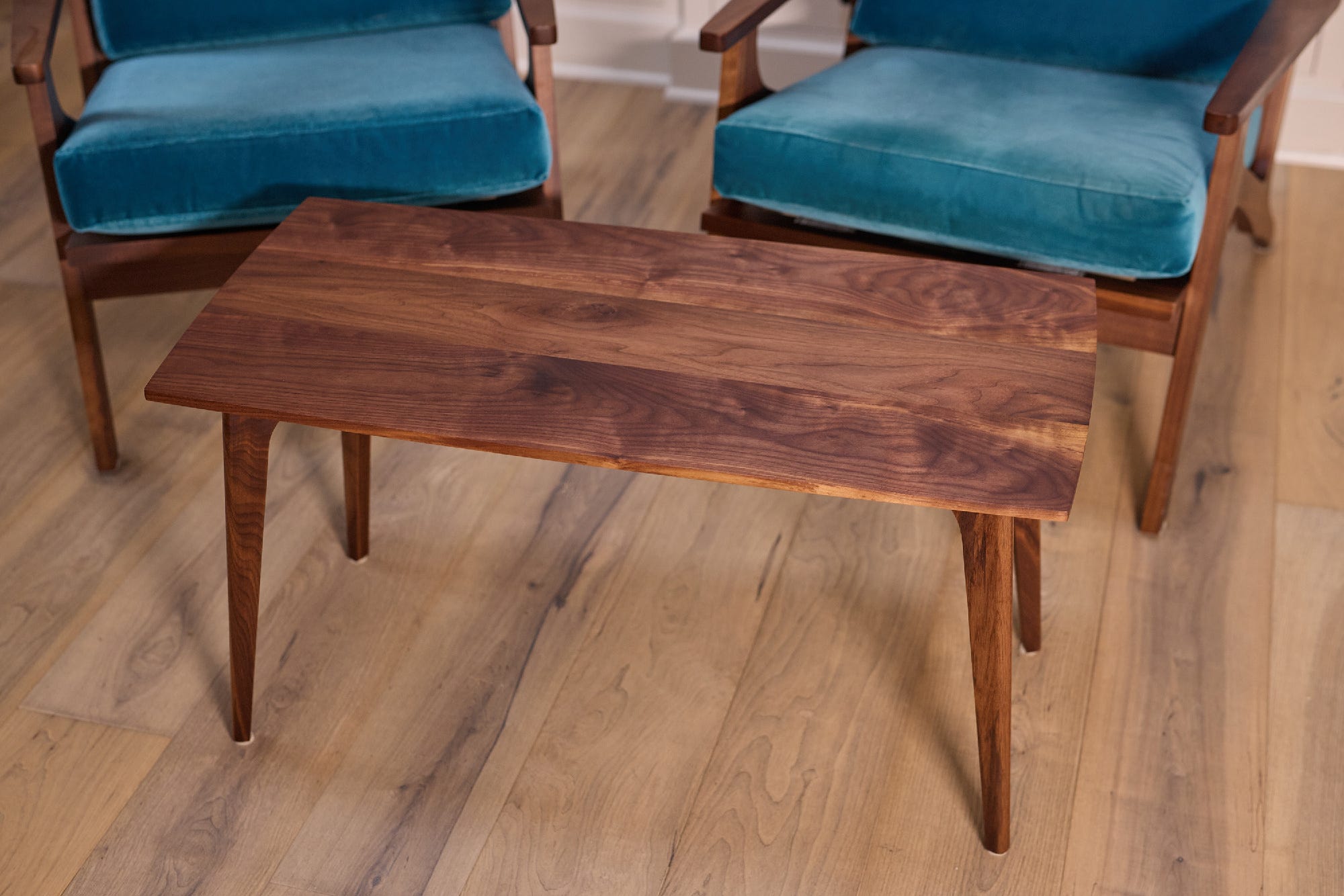
PPS. Because I try not to write about LLMs and this is a violation of the blog’s policy, here’s a (very recent) woodworking tax:
附附注:因为我尽量不写大模型相关的内容,而这违反了本博客的政策,所以这是一笔(非常新鲜的)木工税: